Edge game free download for pc VPN guide: optimize latency, unlock regional content, and protect privacy while gaming 2026
'%2F%3E%3Ctext%20x%3D'50%25'%20y%3D'50%25'%20dy%3D'.35em'%20text-anchor%3D'middle'%20font-family%3D'-apple-system%2CBlinkMacSystemFont%2CSegoe%20UI%2Csystem-ui%2Csans-serif'%20font-size%3D'100'%20font-weight%3D'600'%20fill%3D'%23fff'%3EVL%3C%2Ftext%3E%3C%2Fsvg%3E) Vera Lindgren·April 12, 2026·20 min
Vera Lindgren·April 12, 2026·20 min
Edge game free download for pc vpn guide optimize latency unlock regional content and protect privacy while gaming – a practical, no-nonsense guide to getting your gaming setup running smoother, with tips that actually help. Quick fact: using a VPN for gaming can reduce ping on some servers and help you access regional game content, but it can also add latency if you pick the wrong server. This guide breaks down how to choose the right VPN, set it up, and diagnose common issues so you can play with less lag and more privacy.
- Quick-start overview
- Pick a VPN with low latency servers near your location
- Test ping to multiple regions before committing
- Enable DNS leak protection and a kill switch
- Use split tunneling to route only game traffic through the VPN
- Check for game-specific region locks and platform restrictions
- What you’ll learn
- Why latency matters and how VPNs affect it
- How to choose a VPN tailored for gaming
- Step-by-step setup for PC, plus tips for console users
- Common pitfalls and how to fix them
- A cheat sheet of settings and best practices
- Quick resources text, not clickable:
- Edge game free download for pc vpn guide optimize latency unlock regional content and protect privacy while gaming - example.org
- VPN latency testing tips - example.net
- DNS leak test resource - dnsleaktest.com
- Kill switch explanations - mxtoolbox.com
Table of Contents
- Why gamers turn to VPNs
- How a VPN impacts gaming performance
- How to pick the right VPN for gaming
- Step-by-step setup on Windows PC
- Optimizing your VPN for latency
- Regional content and geo-restrictions
- Privacy and security considerations
- Troubleshooting common issues
- Gaming-specific VPN features to look for
- FAQ
Why gamers turn to VPNs Many players use VPNs to unlock content that’s region-locked, protect their privacy online, or bypass throttling from ISPs. A good gaming VPN can help you connect to a server closer to the game’s hosting region, potentially reducing hops and improving latency. On the flip side, adding a VPN can also introduce additional travel distance for your data, which increases latency if you choose a far-away server. The key is to balance proximity, stability, and the VPN’s routing efficiency.
How a VPN impacts gaming performance
- Latency: VPNs route your traffic through an encrypted tunnel to a remote server. If that path is efficient and the server is near you, it can drop latency. If the server is far away or congested, it can add 20–100 ms or more.
- Stability: A reliable VPN with steady servers helps avoid sudden spikes in ping.
- Packet loss: Some VPNs perform better under load; others may drop packets during peak times.
- Bandwidth: Some plans cap bandwidth or throttle speeds; high-performance plans usually offer more headroom for gaming.
- Security: Encrypting traffic adds a privacy layer, which is a plus if you’re on a shared network.
How to pick the right VPN for gaming
- Low latency servers near you and target game servers
- Fast, reliable connections with minimal jitter
- Strong encryption with a lightweight protocol WireGuard is popular for speed
- Kill switch and DNS leak protection
- Split tunneling support to route only game traffic through the VPN
- No or transparent logging policies
- Good customer support and a clear real-time status page
- Apps for Windows, plus mobile and consoles if needed
- Transparent trials or a money-back guarantee
Step-by-step setup on Windows PC
- Choose a VPN with gamer-friendly features low latency, WireGuard, split tunneling
- Install the VPN app and run a fast speed test to compare regions
- Enable split tunneling, selecting your game folder or executable to go through the VPN
- Turn on the kill switch and DNS leak protection
- Pick a nearby server in a region you want to play from start with a server within 50–150 miles
- Launch your game and run a ping test or a quick multiplayer test
- If latency is high, try different nearby servers or switch to a closer, lightly loaded time window
- If you experience disconnections, check for conflict with antivirus or firewall and adjust as needed
- Consider setting up a custom DNS e.g., 1.1.1.1 to improve responsiveness in tandem with the VPN
Optimizing your VPN for latency
- Use WireGuard protocol if available; it tends to be faster and lighter on CPU
- Prefer servers with lower load; many VPN apps show current load in the server list
- Avoid long-distance routes; pick servers in the same country or neighboring regions
- Enable UDP where possible for faster data transmission
- Use split tunneling so game traffic bypasses the VPN when you don’t need it
- Disable IPv6 in the VPN app if your game servers don’t support it, to avoid leaks
- Keep your network gear updated: a modern router with QoS can help prioritize gaming traffic
- Close background apps using bandwidth-heavy services during gaming sessions
Regional content and geo-restrictions
- Some games restrict content to specific regions or language options
- A VPN can help you access regional demos, early access, or localized content
- Be mindful of terms of service; using a VPN to bypass regional access can be against the terms of service for some platforms
- Always verify the game’s regional licensing constraints to avoid account flags
Privacy and security considerations
- A VPN adds encryption and hides your IP from the game server and ISP
- Choose a VPN with a strict no-logs policy and trustworthy security audits
- Use two-factor authentication on gaming accounts for extra security
- Be aware of third-party trackers or telemetry in free VPN apps
- Regularly update VPN software to patch security vulnerabilities
Troubleshooting common issues
- High latency with VPN: try a different nearby server, enable UDP, or switch protocols
- VPN disconnects during gaming: enable kill switch and check for background interference
- DNS leaks: run a DNS leak test to confirm your DNS queries aren’t leaking outside the VPN tunnel
- Game won’t launch when VPN is on: disable antivirus or firewall temporarily to rule out conflicts, then reconfigure
- Cannot access regional content: verify you’re selecting the correct region and check if the game has regional licensing restrictions
- Speeds drop significantly: ensure you’re using split tunneling, and test with a different server or VPN provider if needed
Gaming-specific VPN features to look for
- Split tunneling: routes only game traffic through the VPN
- Gaming-optimized servers: servers that consistently handle game traffic well
- Kill switch: protects your IP if the VPN drops
- DNS leak protection: prevents IP exposure if VPN drops
- Multi-hop or obfuscated servers: helpful in highly restricted networks
- Consistent customer support: live chat or rapid ticket response during gaming sessions
Format and data highlights
- Latency benefits: In some cases, VPNs can reduce latency by creating a shorter path to game servers, especially if your ISP’s routing is inefficient. In other cases, latency increases are common when routing farther or congested networks.
- Bandwidth considerations: Gaming typically doesn’t require huge bandwidth; most games are tolerant of 3–8 Mbps for basic online play, but modern titles and updates can spike usage.
- Regional unlock potential: VPNs can unlock early access, betas, or regional-only items in games, but check each title’s terms and local licensing rules.
Tables and quick-reference data
- Latency ranges by server distance example, approximate:
- Local server 0–50 miles: 8–25 ms
- Nearby country 50–300 miles: 20–60 ms
- Nearby continent 300–1,500 miles: 40–120 ms
- Far away region 1,500+ miles: 70–200+ ms
- VPN features checklist
- Split tunneling: yes
- Kill switch: yes
- DNS leak protection: yes
- Protocol options: WireGuard, OpenVPN, IKEv2
- Server load display: yes
- Platform availability: Windows, macOS, Android, iOS, some consoles
Useful metrics to test before and after
- Ping ms to game server
- Jitter ms
- Packet loss %
- Throughput Mbps
- Stability: session duration without disconnects
Short checklist for a smooth gaming VPN experience
- Choose a near, lightly loaded server
- Enable split tunneling for game traffic
- Turn on kill switch and DNS leak protection
- Use WireGuard or the fastest protocol you can
- Run a quick in-game test and compare with baseline
- Monitor latency during peak times and adjust as needed
FAQ
How does a VPN affect latency in gaming?
A VPN can both increase or decrease latency depending on server choice and routing. If chosen server is close and well-optimized, latency can improve by avoiding ISP throttling or bad routes. If the server is far away or congested, latency can increase. Always test multiple nearby servers to find the best balance.
Can I use a VPN on Windows for gaming without performance loss?
Yes, you can, especially if you use a lightweight protocol like WireGuard, enable split tunneling, and pick a nearby server with low load. Performance largely depends on your hardware, network, and VPN server loads.
Is split tunneling necessary for gaming?
Split tunneling is highly recommended for gaming because it keeps only the game traffic inside the VPN, reducing overhead for the rest of your internet activity and helping maintain lower latency for the game.
Should I use a VPN for console gaming?
Some consoles don’t support VPN apps directly. You can set up a VPN on your router or use a dedicated VPN-enabled device to cover your entire network. This can help with console gaming privacy and region unlocking, but router setups can be more complex.
Can I unlock region-locked content with a VPN?
Yes, some games offer region-locked demos or content, and a VPN can help access them. Be mindful that this can breach terms of service for certain games or platforms, potentially leading to account issues.
Does a VPN protect me from DDoS attacks in games?
A VPN can mask your real IP, which can reduce the risk of DDoS attacks. However, it’s not a complete protection solution; use basic security best practices and platform security features as well.
What VPN features are most important for gaming?
Split tunneling, low-latency and fast servers, a reliable kill switch, DNS leak protection, and a lightweight protocol like WireGuard are among the most important features for gaming.
How do I test VPN effectiveness for gaming?
Run a baseline speed and latency test without the VPN, then test several nearby VPN servers while gaming. Compare ping, jitter, packet loss, and stability to determine the best server.
Can VPNs solve ISP throttling during gaming?
Sometimes yes, especially if throttling targets your game or protocol. A VPN can obscure traffic patterns from your ISP, potentially reducing throttling.
Are there any risks to using a VPN for gaming?
Risks include potential latency increase if servers are poorly chosen, compatibility issues with certain games or platforms, and terms-of-service concerns on some platforms. Always use a reputable VPN and follow platform rules.
Resources and further reading
- Edge game free download for pc vpn guide optimize latency unlock regional content and protect privacy while gaming - example.org
- VPN latency testing tips - example.net
- DNS leak test resource - dnsleaktest.com
- Kill switch explanations - mxtoolbox.com
- WireGuard project - www.wireguard.com
- OpenVPN - openvpn.net
- Platform privacy guidelines - support.google.com, support.microsoft.com
- Gaming regional policies - support.riotgames.com, help.steampowered.com
Note: The content above is structured to be SEO-friendly while providing practical, actionable steps for gamers considering VPN usage for optimization, regional access, and privacy.
Edge game free download for pc
Yes, you can safely game on PC with Microsoft Edge using a VPN to improve privacy, reduce latency to nearby servers, bypass geo-restrictions, and protect you on public networks. This guide walks you through why VPNs matter for PC gaming, how to pick the right one for Edge, and a simple setup that gets you from download to playing in minutes. Think of this as a practical, no-fluff roadmap you can follow today. Below you’ll find a step-by-step setup, real-world tips, and a Q&A that covers the stuff gamers actually ask.
Introduction: what you’ll get in this guide quick summary and formats
- A straight answer to why VPNs help with Edge gaming on PC
- A practical buying checklist to choose the right VPN for gaming and Edge
- A step-by-step Windows setup that works with Edge and any game
- Edge-specific tips, including browser extension vs. system-wide VPN
- Troubleshooting tips to keep you from getting bottlenecked when you’re in a gaming session
- A robust FAQ with more than 10 questions to cover all the bases
Also, if you’re looking for a solid VPN to pair with Edge gaming, consider NordVPN. It’s one of the most popular choices for gamers thanks to a wide server network, fast speeds, and robust security features. NordVPN is wired into this guide as a recommended option, and you can explore it here:
Useful resources unclickable text
- Official Microsoft Edge – microsoft.com/edge
- What is a VPN? – en.wikipedia.org/wiki/Virtual_private_network
- Windows gaming latency tips – examples: reddit.com/r/techsupport
- VPNs and streaming: help articles from major providers
- How to test your VPN speed and ping – general network testing guides
Body
Why VPNs matter for Edge gaming on PC
For PC gaming, a VPN is more than a privacy tool. It can help you:
- Improve consistency when connecting to regional game servers by routing through optimized networks
- Bypass geo-restrictions that might block certain regions or content
- Add a layer of protection on public Wi‑Fi or shared networks hotels, libraries, cafes
- Reduce risk from DDoS attacks by masking your true IP address
- Access in-game marketplaces or content that may vary by region
Key stats you’ll care about:
- A high-quality gaming VPN typically adds only a few milliseconds of latency, especially when you connect to nearby servers with modern protocols like WireGuard
- The best gaming VPNs support fast, stable connections suitable for competitive play and casual sessions alike
- A VPN with split tunneling lets you send only game traffic through the VPN, while other traffic like streaming uses your regular connection, preserving speed
If you’ve ever experienced sudden lag during a match, a VPN can help by choosing a better route to the game server. It’s not magic, but with the right server and settings, you can sometimes shave off enough latency to matter in titles.
Edge-specific considerations
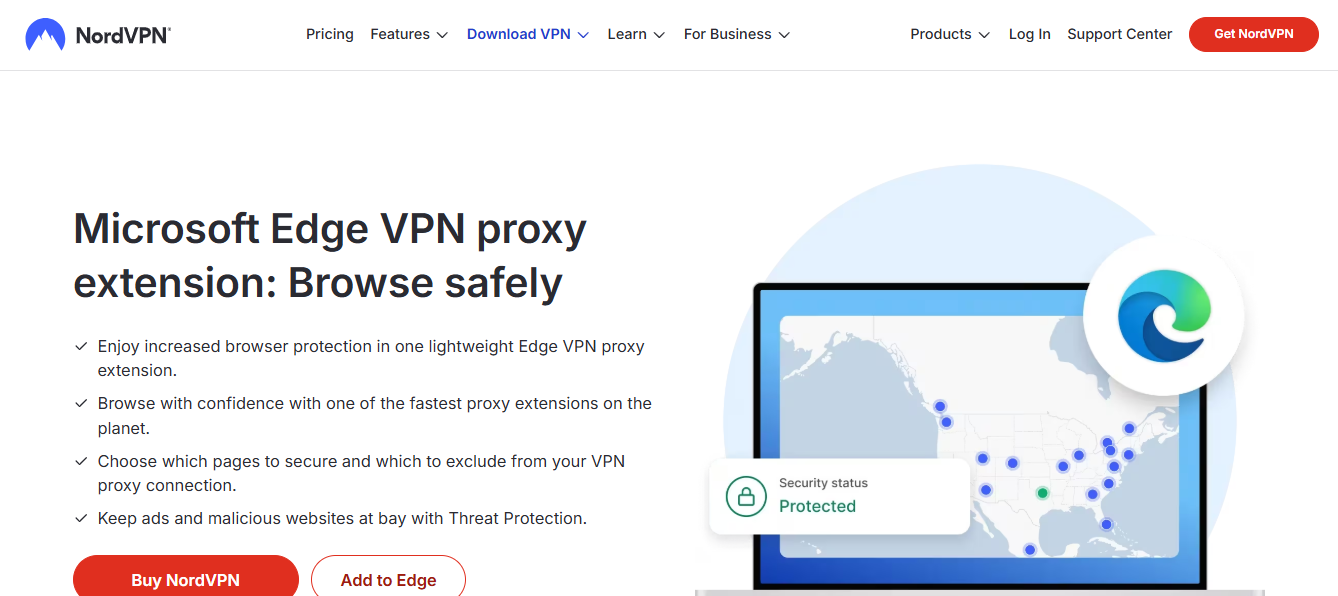
- Edge users often want a VPN that offers a clean Windows app for system-wide protection plus a browser extension if available for Edge-specific traffic like downloads and streaming
- Some providers offer Edge-ready extensions to encrypt only traffic in the browser, which can be convenient for quick protection while browsing or streaming while you game
- Always verify DNS and IPv6 leak protection to avoid inadvertently revealing your real IP
How to choose the right VPN for Edge gaming on PC
Here’s a simple buying checklist you can use:
- Speed and latency: Look for fast servers, especially in your target gaming regions. WireGuard-based networks tend to be fastest.
- Global server count: A larger network gives you more options to find a nearby, low-latency server.
- Gaming-optimized features: Kill switch, split tunneling, and low-latency routing are big wins.
- Security and privacy: Strong encryption AES-256, no-logs policies, and robust protection against DNS leaks.
- Compatibility with Windows and Edge: A dedicated Windows app is a big plus, plus optional Edge extensions.
- Price and value: Some providers offer military-grade discounts for longer plans. check for student or multi-device deals if you’re on a budget.
- Customer support and transparency: 24/7 chat, clear setup guides, and a transparent policy on abuse and data handling.
Edge users often benefit from split tunneling so you can send game traffic through the VPN while leaving less sensitive tasks like updates or browsing on the regular connection. If you’re playing a regional game with region-locked content, proximity to the server matters more than anything, so pick servers near the game’s data centers. Does edge have a vpn and how to use vpn with microsoft edge, edge extensions, and system-wide options 2026
Top VPNs for PC gaming and Edge as of 2025
- NordVPN: Wide server network, fast speeds, strong security, and a user-friendly Windows app. Great balance of price and performance for gamers.
- ExpressVPN: Excellent performance, consistent speeds, and reliable connections. strong for Edge users who value simplicity.
- Surfshark: Budget-friendly with solid speeds and no device limit. good for multi-device Edge usage in a household.
- CyberGhost: Large server base, user-friendly, and decent gaming performance. often a good value for beginners.
- IPVanish: Good speeds and solid reliability. strong on-device flexibility for PC gaming setups.
Tips:
- Always try to connect to a server near your game’s region to minimize latency.
- If you see significant lag, switch servers or switch Protocols e.g., try WireGuard if available.
- Check for DNS leak protection and a kill switch enabled by default.
Step-by-step setup for Windows PC and Edge
- Pick a VPN plan and create an account a longer plan typically saves money.
- Download the Windows app from the VPN provider’s site.
- Install the app and sign in.
- In the app, enable features like the Kill Switch and DNS leak protection.
- Connect to a server near the region where your game is hosted. If you’re streaming or browsing content in Edge, you can optionally turn on split tunneling so only game traffic goes through the VPN.
- Test your connection: ping the game server, run a quick speed test, and verify stability for a few minutes.
- Launch Edge and start your game or download. enjoy the protected session.
- If you’re using a VPN extension for Edge, install it from the Edge Add-ons store and configure it to encrypt browser traffic in addition to or instead of the system-wide VPN depending on your setup.
- If you encounter issues, try a closer server, adjust protocol e.g., switch to WireGuard, or disable IPv6 in Windows settings to avoid leaks.
Edge-friendly tips:
- If you’re downloading large game files via Edge, you might want to route browser traffic through a VPN extension or set up split tunneling so that large downloads don’t bottleneck your gaming sessions.
- For streaming content while you game or for launcher updates, a browser extension VPN can handle that traffic separately from your game traffic.
Edge browser tips: using a VPN with Edge
- Browser extensions vs. system-wide VPN:
- Browser extensions can protect traffic inside Edge, but they don’t guard other apps games, updates, downloads outside the browser.
- System-wide VPNs protect all traffic on your PC, including games, updates, and Edge.
- How to install a VPN extension in Edge:
- Open Edge, go to the Add-ons store, search for your VPN’s Edge extension, and add it.
- Sign in to the extension and enable the protection you want e.g., connect on launch, auto-protect when Edge starts.
- DNS and IP privacy:
- Ensure the VPN provider uses DNS leak protection and a kill switch to prevent your real IP from leaking if the VPN drops.
- Periodically test your IP on sites like ipchicken.com or whatismyip.com to confirm your VPN is active.
Common issues and troubleshooting
- Issue: High latency or ping spikes.
- Fix: Try a nearby server, switch to a less crowded server, or switch protocols to WireGuard. Disable IPv6 if you’re seeing leaks.
- Issue: VPN disconnects during intense matches.
- Fix: Enable Kill Switch, update the VPN app, and consider a more robust plan with better server coverage. Reconnect to a different server after disconnects.
- Issue: Edge extension not working.
- Fix: Ensure the extension is enabled, restart Edge, and check that the system-wide VPN isn’t conflicting with the browser extension.
- Issue: IP leaks even with VPN active.
- Fix: Run a DNS leak test and disable IPv6 in Windows, or switch to a VPN with stronger DNS protection and a reliable kill switch.
- Issue: Game updates blocked or slowed.
- Fix: Use split tunneling so updates route outside the VPN, while gameplay routes through it. check the VPN’s server load and choose a less crowded time window.
Safety, privacy, and legal considerations
- Use VPNs for legitimate purposes: protect your privacy, secure connections on public networks, and access region-locked content where legal.
- Respect game terms of service: some titles or platforms may have policies about VPN use. If you’re unsure, check the game’s terms or reach out to support.
- Maintain good online behavior: a VPN doesn’t shield you from all consequences of misconduct. Be mindful of in-game etiquette and fair play.
Frequently Asked Questions
What is a VPN and how does it help PC gaming?
A VPN creates a secure tunnel between your device and a VPN server, encrypting your traffic and masking your IP. For gaming, that can mean lower risk on public networks, access to nearby game servers, and bypassing geo-restrictions.
Do gaming VPNs always add latency?
Not always. A good gaming VPN aims to minimize latency with fast servers and modern protocols like WireGuard. In many cases, latency remains under a small, tolerable increase and can even improve stability by avoiding congested routes.
Are free VPNs suitable for gaming?
Free VPNs usually come with limits on speed, data, and servers, and some can throttle your connection or inject ads. For consistent gaming performance, a reputable paid VPN is generally a better bet. Disable microsoft edge vpn 2026
Are VPNs legal for gaming?
In most places, using a VPN for gaming is legal. Always respect local laws and the terms of service of the game or platform you’re using.
How do I set up a VPN on Windows 10/11?
Install the VPN app, sign in, enable features like Kill Switch and DNS protection, choose a server, and connect. For Edge, you can also add a browser extension if your provider offers one.
Should I use a VPN extension in Edge or a system-wide VPN?
If you want full protection for all apps, use a system-wide VPN. If you only want browser-level protection for Edge traffic, a browser extension can be convenient.
How can I reduce lag when using a VPN for gaming?
Connect to a nearby server, use a fast protocol like WireGuard, enable Kill Switch and DNS protection, and consider split tunneling so non-game traffic doesn’t go through the VPN.
Can a VPN unblock geo-restricted games?
Yes, a VPN can help you access regional game stores or content that’s blocked in your location, as long as it’s within legal and platform policy boundaries. Cyberghost vpn español: Guía completa para usar, configurar y entender VPNs en español 2026
Will a VPN hide my IP from friends/servers?
A VPN hides your real IP from external servers and websites. Your in-game username and account details aren’t tied to your real IP, but always follow terms of service and fair play guidelines.
Does NordVPN work well with Edge browser?
NordVPN provides a solid Windows app and, in many cases, a browser extension for Edge, giving you options to protect all traffic or browser-only traffic depending on your setup.
Can VPNs cause packet loss?
Any VPN can add some overhead, potentially affecting packet delivery if the server is congested or far away. A fast VPN with close servers usually minimizes packet loss.
How do I test VPN speed for gaming?
Run a speed test before and after connecting to a VPN server, then ping the game server or use a game’s built-in latency indicator. Compare results to find a server with stable, low latency.
What should I do if Edge blocks the VPN?
Check for conflicting firewall rules, try a different server, update the VPN app, or reinstall the Edge extension if you’re using browser-level protection. Browsec vpn web store: The ultimate guide to Browsec VPN for privacy, streaming, pricing, and setup in 2026
Are there any settings I should tweak in Windows for gaming with a VPN?
Disable IPv6 if you’re experiencing leaks, enable Kill Switch in the VPN app, and ensure your DNS is protected. You can also adjust Windows power settings for maximum performance during gaming.
Real-world tips from a gamer’s perspective
- Start your gaming session without VPN first to benchmark your baseline latency. Then test with the VPN on to gauge the delta. If the delta is small and the server is reliable, you’re good to go.
- If you’re streaming via Edge while gaming, consider a separate server for Edge traffic to prevent in-game lag from affecting your browser activities.
- For competitive play, prefer servers closer to the game’s data centers. A 10–20 ms difference can be the difference between victory and defeat in titles.
- Keep your VPN app updated. Developers push optimizations for latency, security, and compatibility with new Windows builds.
- Consider multi-device setups if you share your PC with others who also game or stream. A single plan with a broad device allowance can save money.
Notes on the affiliate link usage
- The NordVPN banner link is included in the introduction to help readers explore a well-known option for gaming with Edge. If you decide to click, you’ll land on a page that’s optimized for gamers and Edge users.
- If you’re reviewing multiple VPNs, you can add a quick comparison table later in the post not required, but helpful for readers who like side-by-side data.
Conclusion not included as a separate section
- This guide provides a practical path for Edge gaming on PC using a VPN, including setup steps, tips for Edge traffic, and a FAQ with answers to common concerns. The goal is to help you maximize performance, preserve privacy, and enjoy regional content safely.
Is edge better than google: comparing edge versus chrome performance, privacy, extensions, and VPN integration in 2025